Showing posts with label gardening 2011. Show all posts

Thursday, January 19, 2012

Sunny Days

Brrrr… a wee bit on the chilly side, here in London, Ontario. We’ve finally got a bit of the white stuff on the ground and I’m sure that many skiers and snowboarders are happy!

Although I always enjoy the winter season – ha! for the most part – one thing that I like to do, to keep warm, is reminisce about the summer season. I’ve been saving these gardening photos to share with you now so that you can also enjoy reliving the sunny days of summer…


In 2010 I had a major restoration job to do on the foundation wall at the back of my house. After the work was done, I had a bit of fun painting a silly image on the wall before the whole thing got filled in with soil.


Last spring, I more than doubled the size of this garden area, adding a nice curve to finish it off.


For the most part, I planted yellow beans along the whole front of this space, with Gladiolas planted closer to the house. I added a few small hostas around the garden hose and nearest the corner of the house I planted some baby blue Morning Glories.


I added small round cages around the beans to give them a bit of stability as they grew higher. Since so much soil was exposed to the air – while everything was filling in – I added lots of grass clippings to hold the moisture in the soil. The Morning Glories were growing very quickly and soon I had to add metal poles with string strung between their lengths so that the flowers would have somewhere to grow.


Here you can see that the green grass clippings have turned brown, as they continue to hold moisture in the soil while they decompose to add nutrients to the soil. You can see a few yellow beans peaking out and the Morning Glories continue to grow and grow!
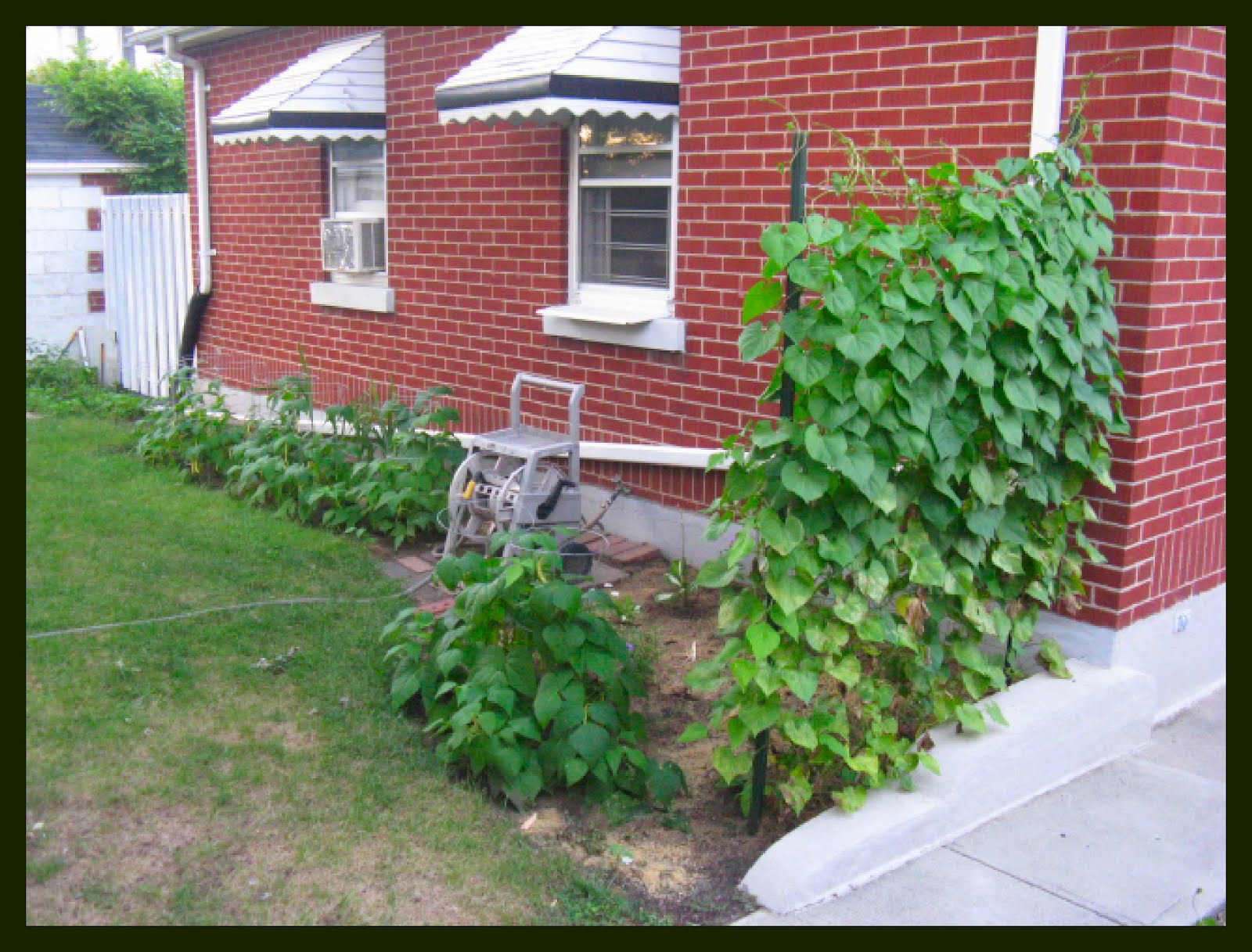

My idea for the Morning Glories was simple… I wanted to grow a wall of flowers. But you can see that my idea was getting out of control. Already the plants have grown as tall as the metal poles and they are reaching to grow higher still! What am I going to do?


It’s a little hard to see, but I ended up using a heavy-duty rope to run lines from the tops of the metal poles all the way to the window awning.


Morning Glories are a plant that needs continuous maintenance – if you are trying to grow a wall of flowers. Daily, I would weave the vines up and down and around the ropes. Left unattended the vines would simply grow upwards for a foot or two, become heavy from the weight of its own self and then fall towards the ground. They don’t naturally twist and weave themselves around the support ropes I put in place.


I would spend close to half an hour, each day, redirecting and maneuvering these vines. It was lots of fun and I learned a lot about how this plant grows… but soon I had a wild jungle on my hands and I saw my control slipping away.


These plants didn’t seem like they were ever going to stop growing… and they never did, until the Autumn frost finally killed the plants and flowers. You can see how far the vines stretched.

Yeah!!!! After patiently watching and tending to these vines for almost two months, it was now time to for the flowers to start blooming!


This particular species of Morning Glory produced flowers in baby-blue hues. What a delight! The flower lasted for just one day and then they died… but not before turning an interesting shade of fuscia. As the flowering season continued my jungle of green sparkled with two different colours at the same time.

To get these photos I actually had to climb onto my garage roof!!! My neighbours must have thought I was a bit nuts cuz I climbed up there quite often. I’m just showing you a few of my favourite ones.


I love macro photography! Getting in nice and close to one flower, while the ones in the distance loose their focus to add interesting textures to the composition.


This photo actually took me a while to compose. It was rather difficult cuz I had to climb up a shaky ladder. I was trying to compose an image that delved into the ideals of structured balance between light and dark. I had to think of the shadows in the foreground and balance them using the light on my neighbour’s garage wall in the background . I also spent time placing the loose, curvy vines in such a way as to compliment the rigid lines of the architectural structures in this photo. By fiddling with different applications on my computer an interesting final composition emerges for you to enjoy!!!


This image was also created using a computer application. As an artist who takes a long time to create just one painted image, I find it rewarding to use a computer to create an image that could well resemble my style of painting in less than an hour.
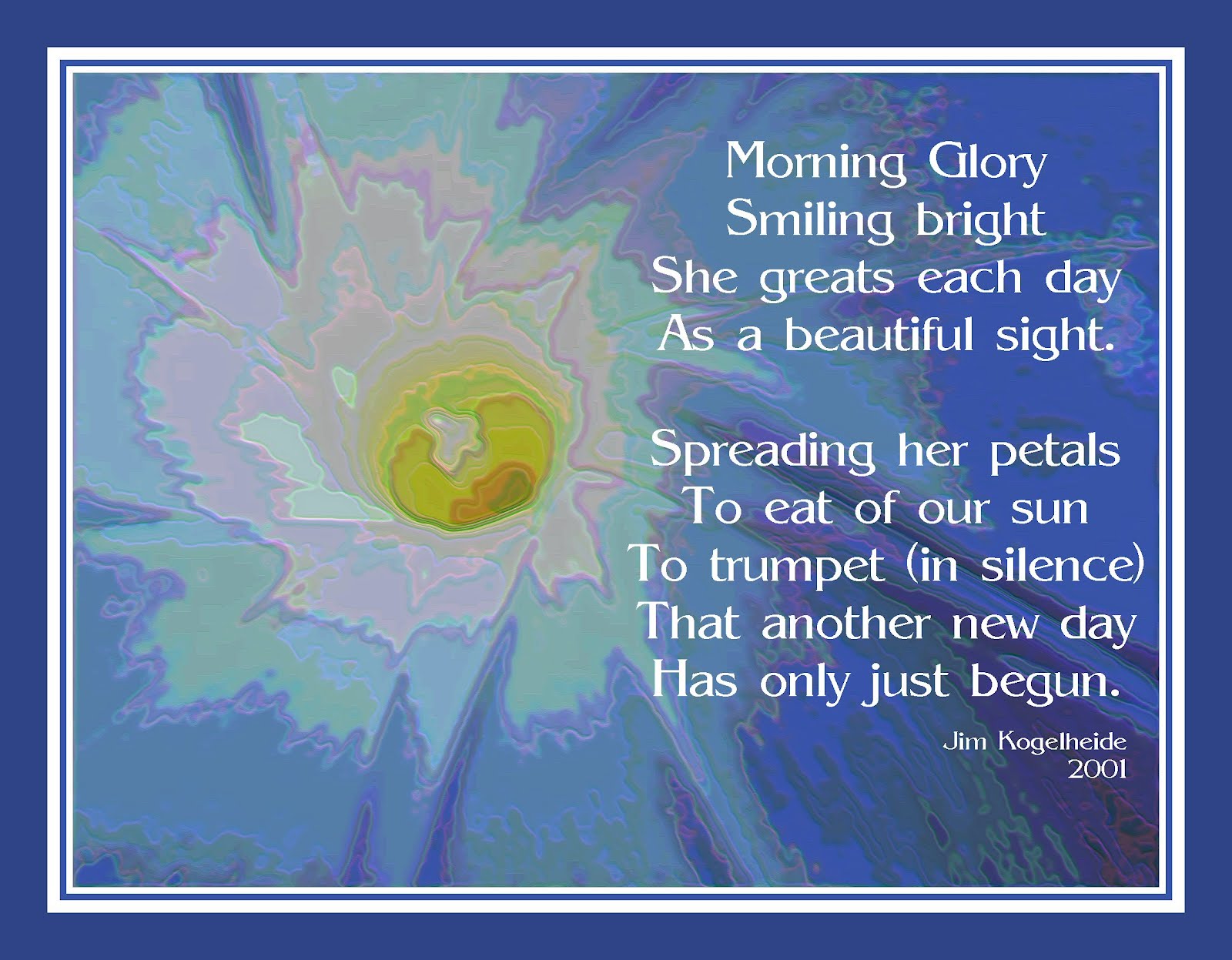

This final image that I have to share with you, was also created using my computer. I just love the wet metallic feel of this organic lifeform, stretching and yawning in its expanse to grow and evolve!

I’ve added a poem that I wrote over a decade ago – inspired by thoughts of Morning Glories (of course) – to complete this image. I know that many of you like to steal (er – I mean share) many of the images that I use in my blogs, so I made this image just for you. An inspirational poem and image to decorate your office wall, to remind us of the summer’s sun as we continue our way through the winter.

Jim

Wednesday, September 7, 2011

My Veggie Patch

Last year, I shared many a blog about my adventures in my veggie patch. I wrote about how to make a garden from a lawn, how to add leaves and grass clippings into the soil, how to make raised beds and how to harvest the yummy vegetables. Since I don’t like repeating myself, too often, I thought that I’d just share some of the highlights from this year’s garden…


In the early spring, my first chore was to expand the length of my garden – you can see that I’m building it into a long snake-like shape. I turned the soil over and buried all the composting plants from last year’s garden. I thought I’d try to grow some onions and I learned that they need to be planted very early and you can see that I created a raised bed for them.

The rest of the garden that is visible in this photo has been covered with the compost that I made from last year’s table scraps and yard waste. It looks like it is also covered in snow, but what you are seeing is a layer of crushed eggshells. Whenever I cook or bake using eggs, I put the empty shells into a container to dry and then I use a potato masher to crush them into tiny bits, before I sprinkle them onto my garden.

In the eggshell area you can see very small plants growing. Let’s take a closer look…


The entire area that I covered with compost started filling in with many of these small plants. That’s the benefit of putting compost into your garden – free food! You just don’t know what you’re going to get, though!!!


Many free plants started growing in this area and I built mini ‘volcanoes’ around each plant so that they would have more water to drink to grow. I was thinking that these plants could be pumpkin, acorn squash, butternut squash, zucchini, watermelon or cantaloupe. I also knew that the plants would take up a lot of space and that I would soon be choosing which three plants I would let continue to grow in this area. For now, I encouraged each plant to grow until I could determine the shape of the plants leaves – which would tell me how many different species of plants I had growing.

After a few more weeks I noted that I had three species and so I chose the healthiest of each species to continue to grow. At this point, I still had no idea what I was growing!


After the volcanoes were built, I covered the entire area with leaf mulch. In the autumn, instead of bagging my leaves, setting them on the curb and leaving them for someone else to deal with, I keep them, shred them and add their nutrients to all my gardens.


Then it was time to get the rest of the veggie patch ready. Before I could plant my tomatoes and beans, I first had to have my spring fire in the metal tirewall you see here. During the year, I collect all the twigs and branches that fall from my trees and every spring and fall I burn them in my garden. After the fire is reduced to glowing embers I rake them over my garden. The hot embers burn any weeds growing in the top layer of soil and the ash from the fire adds nitrogen to the soil.

Since my lawn grows so quickly in the spring, I also add these clipping to my garden, on top of the leaf mulch. The grass and the leaves will compost adding more nutrients to the soil and while they are composting they are also keeping the soil moist.

Hmmmmm…. all the photos in this story are filled with different shades of brown – a little boring. To brighten things up a bit, here are a few photos of the spring flowers that bloomed at the one end of this garden…


This is one of the tulips that bloomed. In the background you can see the colours of the blue forget-me-nots and a yellow daffodil.


Here are some allums just bursting to bloom.


Almost in full bloom.


In full bloom.


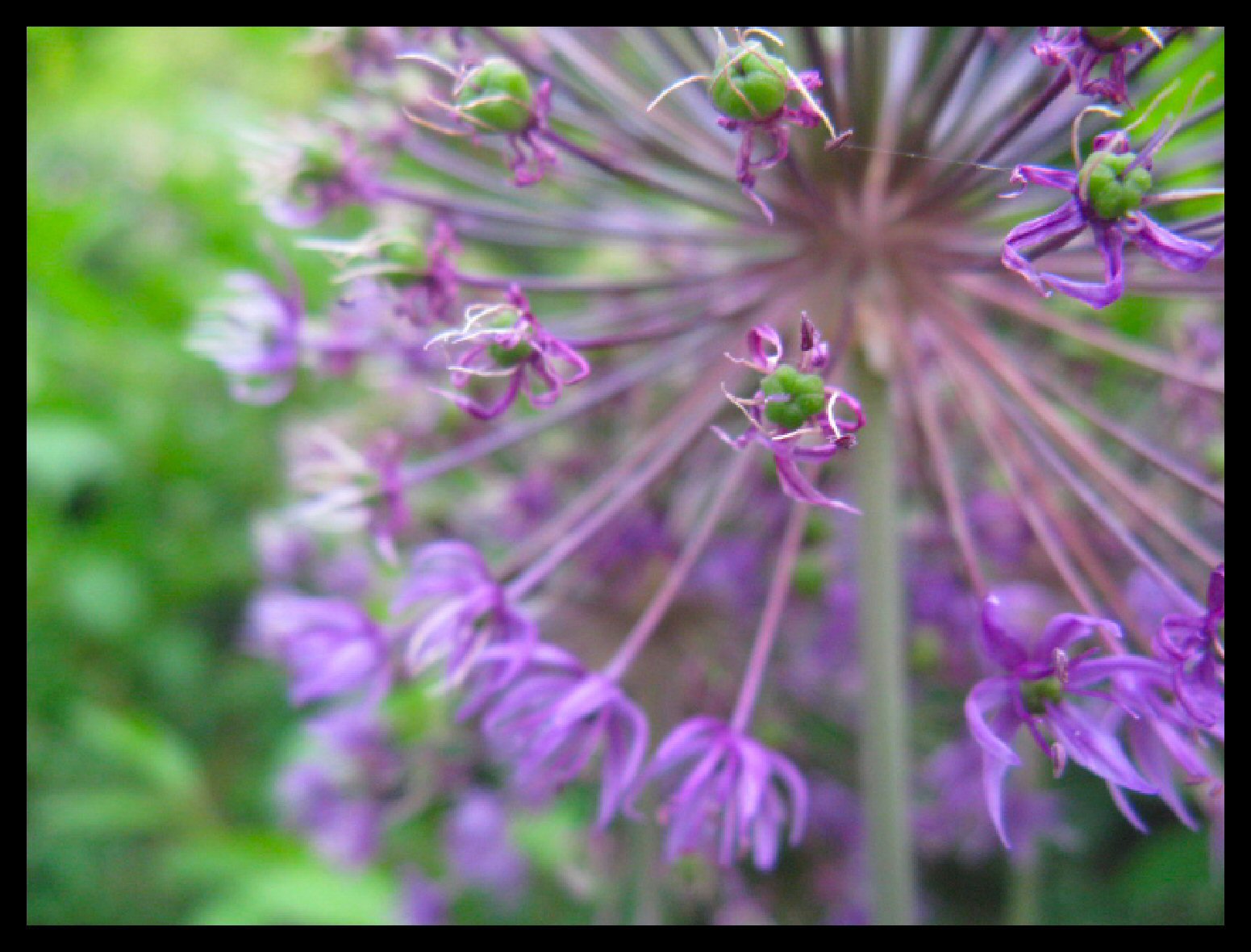
And now seeding after its bloom.

There – a splash of colour! Now back to the dirt…


… which can’t be seen anymore, cuz the entire area is filled with vegetable plants!!!!

The unknown plants, which grew from my compost, have taken over my entire garden! They’ve grown up into my juniper bush. They’ve grown all the way to my back hedge. They’ve taken over my back lawn. Yikes!!! Just three plants. Could you imagine what would have happened if I had let all the free plants grow?!!

Those of you with keen eyes have probably already realized that one to the three plant species is…


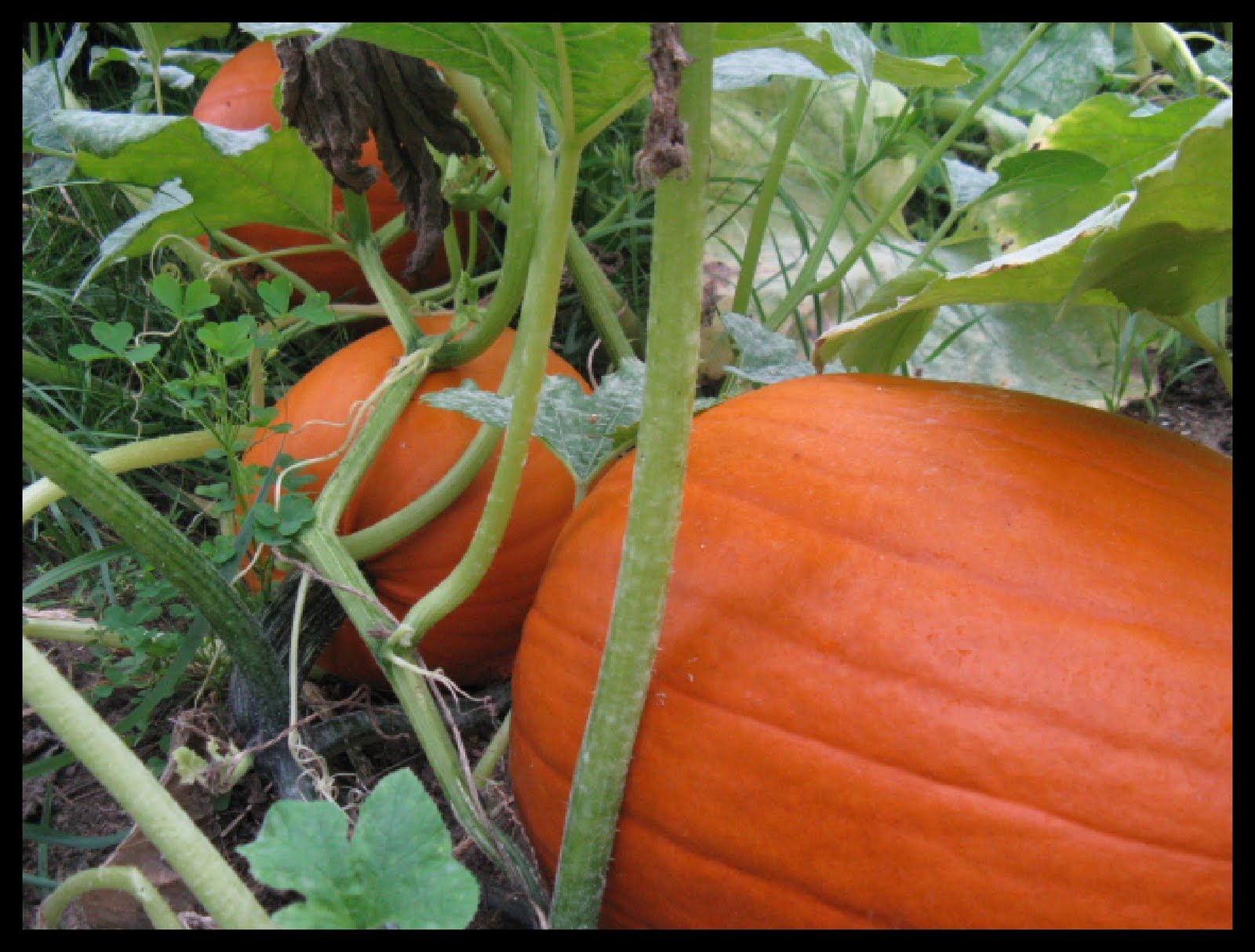
… a pumpkin plant!

Another of the three plants turned out to also be a pumpkin plant – a different kind of pumpkin plant tho’. The final plant grew up to be an acorn squash and in another week or so I’ll be harvesting these.

Having a garden and being able to provide at least some of the food that ends up on your dinner plate is very important – in my eyes – for creating a future for the world. What better way is there to establish a bond between yourself and our planet than by touching the Earth and tending to her flowers and vegetables? Think of all the chemicals that were not produced in factories because your garden didn’t consume any. Think of all the fuel that was not used in transporting food to your table. Think of the health of the food that you grow, realizing it is fresher than any other product you can find in the stores – tomatoes were not picked while they were green, to turn red during the transportation to your local store. The list of benefits goes on and on…

I hope that you have enjoyed watching my garden evolve through the last few seasons and I hope that I’ve inspired all of you to consider doing a little growing of your own!

Jim

Friday, July 22, 2011

God’s Glue

About fifteen years ago, I was gathering and organizing my thoughts to understand why our world is in such a dilapidated state of environmental care, so that I could best choose my path forward in such a way that my actions would help to create a better world for future generations.

I started defining words like karma and destiny. Somehow or other I came across the word ‘providence’ and I included it in an essay I was writing. I wrote, “When a person has made a decision to act as an inspiration or true steward for the Earth, providence will move!” This is similar to the philosophy of ‘Positive Attraction’. If one is dedicated to positive action then positive results will prevail. Providence is – according to my dictionary – ‘God’s protective care’, and with providence one will achieve positive results.

Over time, I’ve come to notice that providence seems to thread its existence through synchronistic occurrences. Synchronicities may be involved in karmic activities that will aid in one’s pursuits to flow through life as one embraces destiny, but sometimes synchronicities just happen – with no apparent affect on a soul other than simple appreciation for this phenomenon.

Today’s story revolves around this idea…


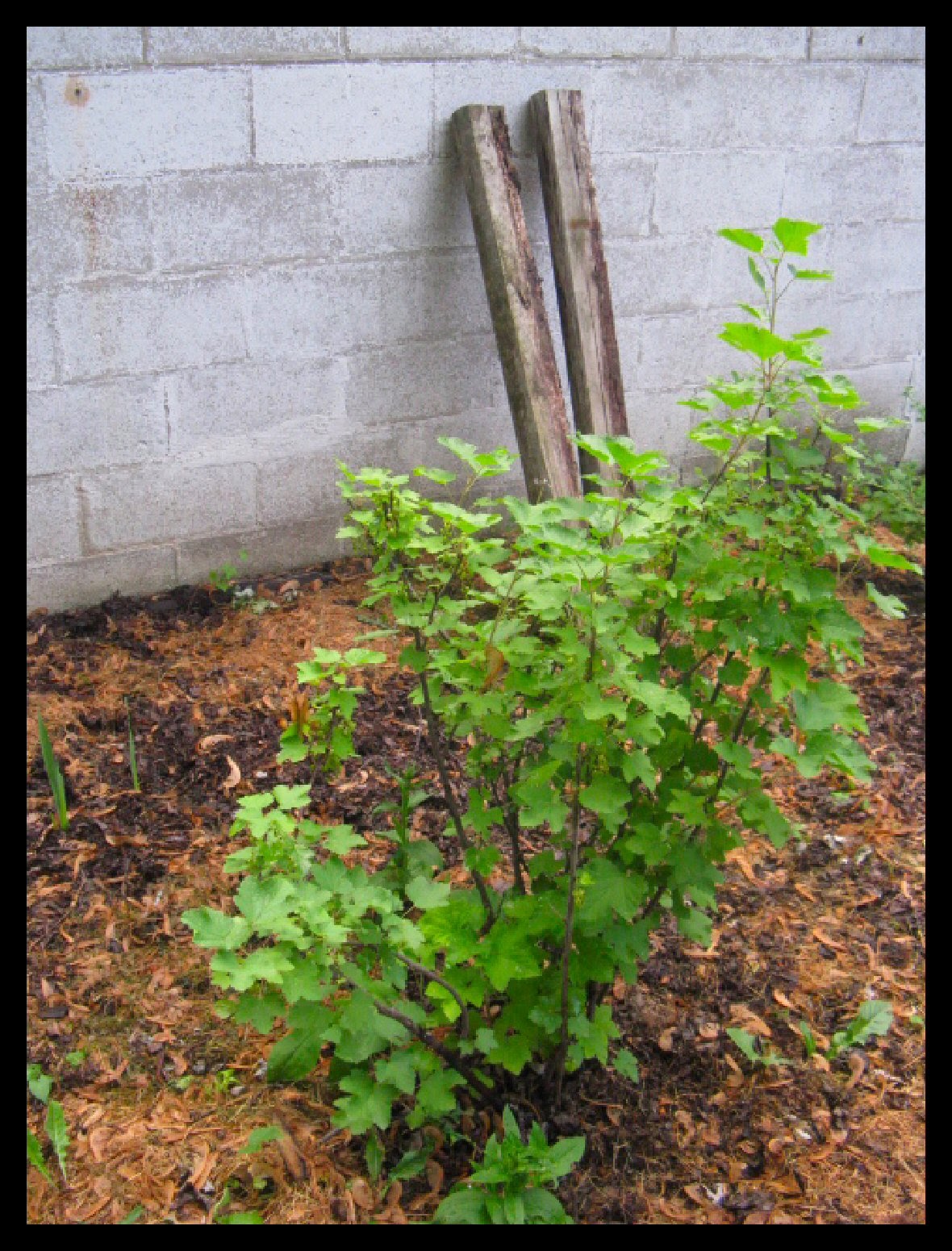
This is one of the Red Currant bushes that I planted in my berry patch, last spring. You can tell that this photo was also taken in the spring cuz the ground is littered with freshly fallen Maple tree keys. You’d be correct in thinking that this is not a very big deal – it’s just a berry bush, but let’s take a closer look…


Hmmmmm… what’s this? I can see one or two Maple keys stuck to one of the Red Currant bush’s leaves. Interesting! Let’s take a closer look…


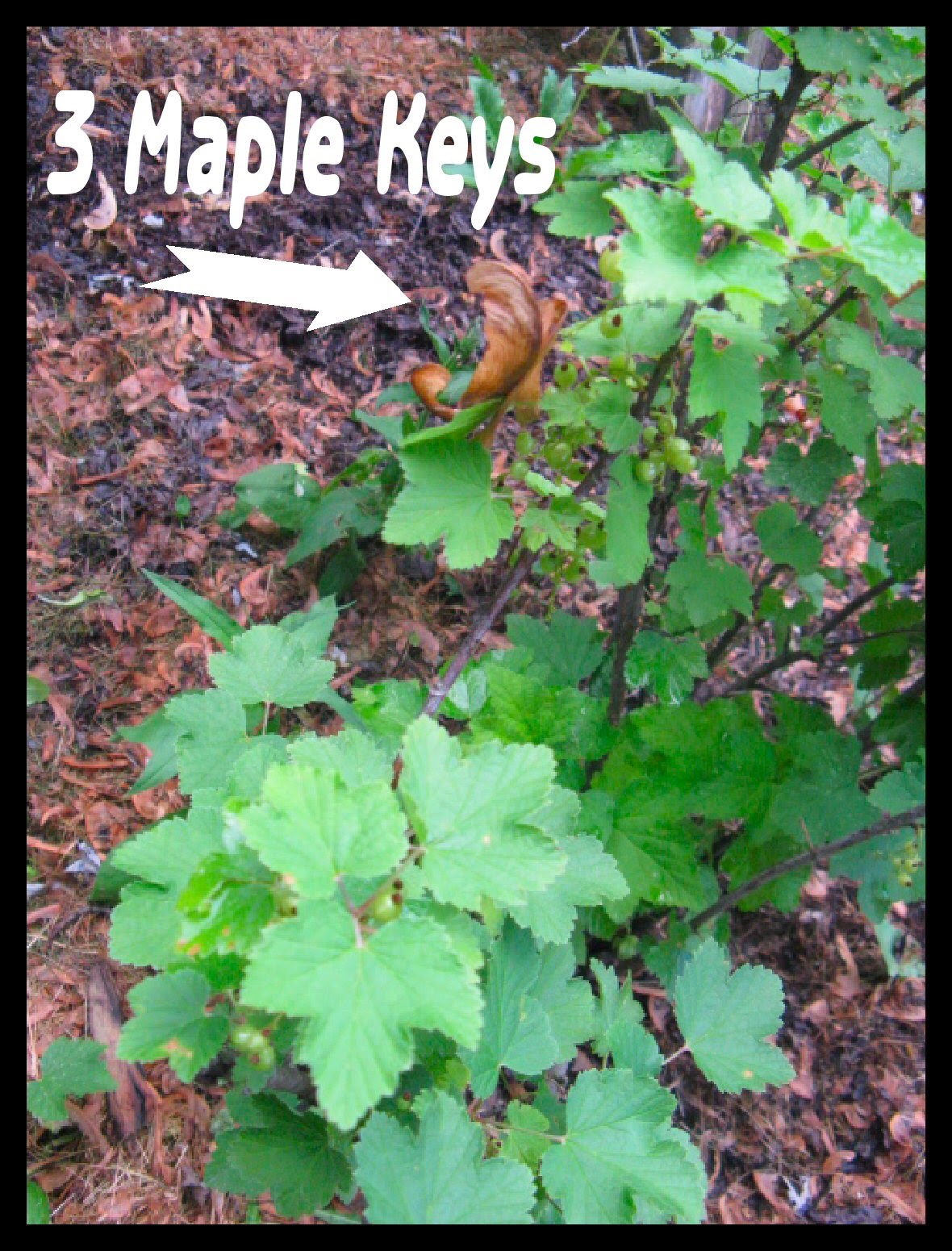
Oh! In fact there are three Maple keys somehow hanging on to one of the berry bush’s leaves. Unbelievable… but true!


It’s really hard to see this clearly in a two-dimensional photo, so I took a few pics from different angles. While I was moving around the bush, snapping these photos, my mind wandered around – wherever it tends to wander – searching for an explanation.


In slow motion, my mind played back for me a possible scenario that could have happened to create this natural phenomenon. It was a very rainy Spring, here in London, Ontario and so the Red Currant leaf and the three Maple keys – along with everything else in my garden – was covered in tiny beads of moisture. The wind might have been blowing a slight breeze through the air at the time when these three individual Maple keys had fallen off the tree to begin their swirling decent to the ground. In my mind I could picture these three keys swirling about as they descended, drawing ever closer to each other and to the very small leaf on the berry bush. Then, in one flash of an instance all three keys magically touched – each other and the leaf on the bush! Synchronicity!!!

Had there been no breeze – these three keys would have never met. Had there been a stronger breeze – these three keys would have never met. Had it been a wetter day, the keys may have had too much moisture on them and again, they would not have met. Had it been a drier Spring, then there would have been no moisture and these keys would not have been able to stick together. See the magic, now?!

Thousands of different variables came into action throughout the brief history of this event and had one single variable been just slightly different then this phenomenon would not have happened.

While I marveled at this, a song started playing in my head and I could hear Bono singing, “Stuck together with God’s glue”. I smiled as I appreciated this most excellent tune drifting through my mind as I appreciated this most synchronistic Earthly phenomenon!!!

Nature is continuously swirling around us and if we had a way of identifying the millions of synchronistic Earthly phenomena that are continuously occurring I’m sure that we would be awestruck with lack of definition. I think that this is a good thing!!! Nature should always delight us with fascination. Nature should always thrill our investigative minds. Nature should be honoured for its fierceness and gentleness…

… but it sure is hard to do these things while we surround ourselves in technologies that have become blasé. So, get off that couch, put down that remote and go for a walk in a park full of grasses, bushes and trees and you, too, may witness a most synchronistic Earthly phenomenon that was created just for you.

Jim

PS – For your enjoyment, I have included a link to the U2 song mentioned above, as well as a Beatles classic that elaborates on the subject matter of this short story…

U2 – Staring At The Sun
http://www.youtube.com/watch?v=U3jzvVPWy2I

The Beatles – Within You and Without You
http://www.youtube.com/watch?v=p4G2RlBKbrM

Here’s a little treat for my newest readers, who don’t know that I have a few (5) Youtube videos of my very own….

Jim Kogelheide – The Bricks of Love
http://www.youtube.com/watch?v=tVcQiXq9qhI

ENJOY!!!!

Tuesday, June 7, 2011

Flowers and More Flowers

My garden has been offering to my eyes a never-ending pallet of delightful colours. I have been neglecting my duty by not sharing them with you. I’m changing that fact right now…


What’s this??? A totally boring photo with no bright colours! Well, I had to start somewhere. I built this tree-ring Day Lily flowerbed last year. Last Autumn, I covered it in a thick layer of leaves to help to protect it from the harsh winter. This Spring, I got an idea…


If I were to leave the leaves in place, would the Day Lilies be able to grow up and through them? The answer was, “Yes! No Problem!” The reason why I did this was to stop all the moisture in the soil from evaporating during the hot summer days. The leaves will also decompose, adding nutrients to the soil, and they will also prevent other weeds from invading this area.


Ummmmm… I forgot about the Spring winds! Once the top layer of leaves began to dry out, they also began to blow out - over the rest of my lawn! D’oh!!! I added just a thin layer of topsoil on top of the leaves to keep them in place. This is a great photo to show how most plants multiply. Last year, this small clump consisted of just three lilies and this year there are eight lily flowers. From the main clump you can see how ‘runner’ roots spread out – almost in an arc-like fashion – to fill in area for the next season.


For the next – like forever – it rained and rained!!!! Once the sun had a chance to do its job, all the flowers in my garden really started growing high and strong!


As per usual, I enjoy fiddling around with my flower images on the computer to enhance the colours and textures of the plants and flowers. This image will be my album cover for my garden photoalbum on Facebook, this year. These Day Lilies look like an explosion of life and colour!!! I love it!


Compare this photo to the very first one in this blog story and you’ll see how far this small patch of lilies has come, so far this year.


This is how this garden looked at its height, last season. WOW!!! What a difference. Last year, I saw only about ten flowers in this whole garden. This year, each individual flower will produce about ten flowers… and doing a bit of quick math will tell me that I should see over four hundred flowers over a 3-4 week period!!! Impressive!


Just a few feet away we can see my birdbath garden.


This garden space is not very large, but it is filled with a large variety of flowers.


Over the last few years I’ve been teaching myself how to build the perfect flower garden.


I’ve been studying the colours and heights and learning when certain flowers bloom.


I try to plan my gardens so that when one flower has bloomed and died, there is soon a different species of flower growing to take its place.


As my Daffodils are blooming, my Tulips are growing.


As the Daffodils begin to die off, the Tulips spread a new colour through my garden.


This is what my birdbath garden looks like today. The small purple flowers (I don’t know what they are called) have now turned to seed, the Daffodils have wilted away and the Tulip flowers have all fallen off.


Now is the season for the Iris. You can also see another few patches of green growing on either side of the Irises – these flowers will bloom in another month with bright purple flowers. The other thing that is hard to notice – right now – are the very small Pepper plants and Eggplants that will fill in this space once the Irises have finished flowering.


This small garden has taught me about seven different species of flowers. Flowers are in constant bloom from the earliest of Spring into the middle of Summer, with a small Autumn harvest of food, to boot!!!! You really can do quite a lot with a small amount of space.

These are just two of the seven gardens I have in my backyard. But, now, I want to take you on a small journey to see how my front garden prospered this year…


This garden is filled with mostly Summer flowers, but I do love the small splashes of Spring Daffodils and Tulips that usher in the growing season.


I built and planted this garden last Spring and because the roots of all my flowers were healing I saw very few blooms, last year. I was really excited to see so many Tulips blooming this Spring and I know that next year I will see even more!


Just a few weeks later, many other flowers have begun to fill in this space. In another few weeks, the lilies – bottom left – will bloom with burgundy and yellow flowers. In another few weeks, after that, my Cardinals – hidden by the lilies – will shoot rockets of red skyward to attract the Hummingbirds.


But, for now, let’s take a closer look at my Bleeding Heart!


And… a little closer!!!


I always like to get in really close with my camera, when I’m taking pictures of flowers!


At the other end of this garden, another plant has bloomed. I’m rather proud of how I planted these to grow in the shape of a curve to follow the edge of the garden.


I still have so much to learn about the flowers in my garden. This is another species that I’ve learned a lot about… everything except its name!


I look forward to letting Nature continuously surprise and delight me so that I can continue to share these marvels and adventures in gardening with you. I hope that these many colourful photos have inspired you to take a closer look at the beauty that surrounds us as we tread our own course of growth and change to realize that each of us is as simple as a flower – understanding that a flower is a complicated thing!

Jim